

Table of Contents
- Understanding Your Artisanal Jewelry Before You Clean
- How to Clean Handmade Jewelry Safely
- Cleaning Gemstone Jewelry with Care
- Sterling Silver Jewelry Care and Tarnish Prevention
- How to Store Handmade Jewelry Properly
- Daily Habits to Protect Your Artisanal Jewelry
- When to Seek Professional Repair and Restoration
- Frequently Asked Questions
Last Updated: October 11, 2026
Understanding Your Artisanal Jewelry Before You Clean
Artisanal jewelry is handcrafted using varied materials and construction methods, and each piece's uniqueness means proper care for artisanal jewelry differs from mass-produced items. Understanding your piece before cleaning prevents damage.
Identifying Materials and Finishes
Handmade jewelry typically contains sterling silver, gold, gemstones, beads, or mixed metals, each reacts differently to water, soap, and air.
Sterling silver tarnishes with air and moisture exposure. Gold-plated pieces can lose plating with aggressive scrubbing. Diamonds tolerate most cleaning methods, but softer stones like opal, pearl, and turquoise need gentler treatment.
Check maker's marks or documentation for metal type and purity. If unsure, ask the artisan or consult a jeweler.
Mixed-metal pieces require care suited to the most delicate material in the design.
Recognizing Construction Details
Handmade jewelry often uses adhesives, wire wrapping, or delicate settings that require specific care.
Wire-wrapped stones tolerate less pressure than traditional settings. Beaded pieces can weaken if soaked long. Glued elements can separate with prolonged moisture or harsh chemicals.
Identify whether stones are set in prongs or wire, whether the piece uses cord or chain, and whether it has glued components, these details shape your care routine.
How to Clean Handmade Jewelry Safely
Gentle cleaning removes dirt and oils without stressing materials or construction.
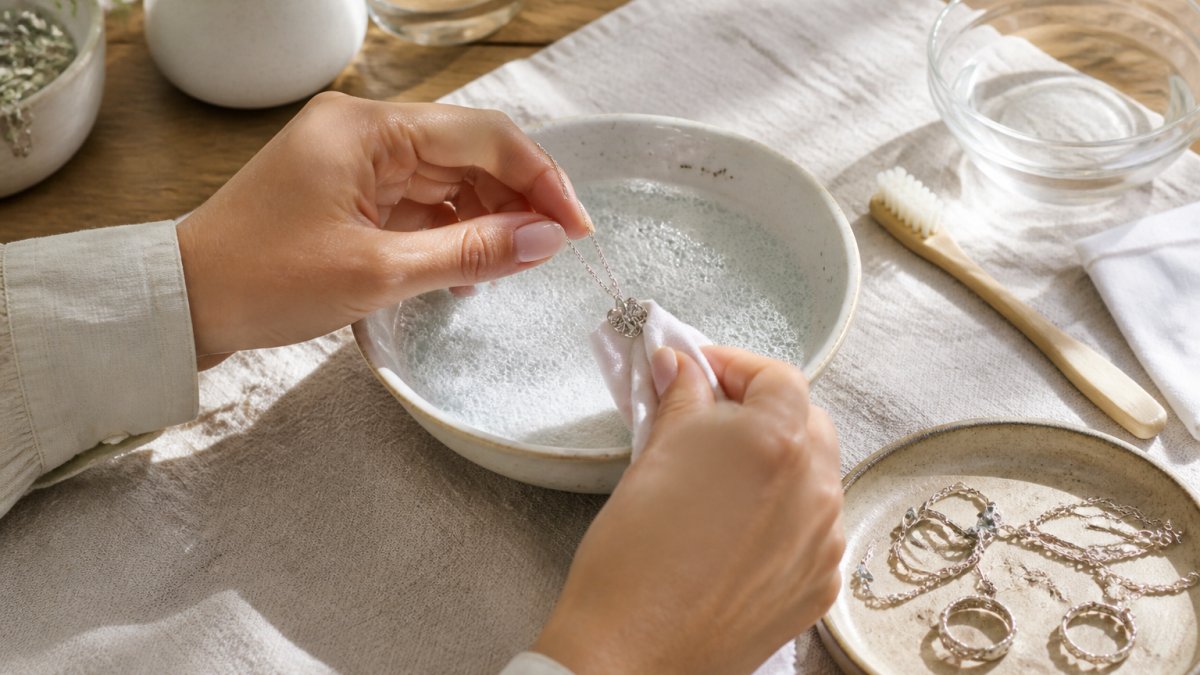
Gentle Cleaning with Mild Soap and Water
Warm water and mild dish soap safely remove everyday oils and dust.
Fill a bowl with lukewarm water, add one drop of mild dish soap, and soak your jewelry for two to three minutes to loosen surface dirt.
Gently agitate the water with your fingers, don't scrub. Rinse thoroughly under running water to remove all soap residue, which dulls finishes.
Pat dry immediately with a soft, lint-free cloth to prevent tarnish and water spots.
Using a Soft Cloth and Jewelry Brush
Between washes, use a microfiber cloth to gently wipe your piece after wearing it, removing oils and dust before they accumulate.
For detailed areas, use a soft-bristled brush (like a child's toothbrush) dampened slightly with distilled water. Never use stiff brushes, which scratch finishes.
Dry thoroughly, paying special attention to grooves where water can hide.
Cleaning Gemstone Jewelry with Care
Each gemstone type requires different cleaning methods, what's safe for diamond may damage opal or pearl.
Stone-Specific Cleaning Methods
Hard stones like diamond, sapphire, and ruby tolerate warm soapy water and gentle brushing.
Softer stones like opal, pearl, turquoise, and moonstone absorb water and can become brittle or discolored. Clean with a barely damp cloth only, skip soaking entirely.
Porous stones like turquoise and lapis lazuli absorb oils and dyes. Clean with a dry microfiber cloth only.
Treated stones like heat-treated ruby or oiled emerald can be damaged by water. Ask the artisan for specific care instructions.
What to Avoid with Gemstones
Never use ultrasonic or steam cleaners on handmade jewelry, vibrations and heat can loosen settings, crack stones, or damage adhesives.
Avoid commercial jewelry cleaners and polishing cloths, which contain harsh chemicals or abrasives. Use mild soap and water or dry cloth cleaning only.
Avoid prolonged soaking, even hard stones can absorb water into fractures. Keep soaking to two or three minutes maximum.
Sterling Silver Jewelry Care and Tarnish Prevention
Sterling silver is a popular choice for artisanal jewelry because it's durable and beautiful. However, it tarnishes, a natural darkening that occurs when silver reacts with sulfur compounds in air and moisture. Preventing tarnish is easier than removing it.
Preventing Tarnish Before It Starts
Tarnish happens naturally, but you can slow it dramatically by controlling exposure to moisture and air. A jewelry box works well, but adding a small silica gel packet inside absorbs moisture and extends tarnish-free time.
Wear your sterling silver pieces regularly. Surprisingly, worn jewelry tarnishes more slowly than stored jewelry because the friction from wearing polishes the surface and removes tarnish as it forms.
Remove your jewelry before bathing, swimming, or exercising. Water and sweat accelerate tarnish. Keep sterling silver away from chlorine pools, hot springs, and salt water. These environments speed tarnish formation dramatically.
Store each piece separately or wrap it in soft cloth to prevent pieces from rubbing together. Friction can scratch finishes and trap moisture between pieces, creating pockets where tarnish forms faster.
Safe Tarnish Removal
If tarnish does develop, gentle methods remove it without damaging your piece. Never use abrasive polishing pads or harsh chemical dips designed for factory jewelry.
For light tarnish, use a soft microfiber cloth designed for silver. Gently rub the tarnished areas in one direction, not circular motions.
For heavier tarnish, make a paste with baking soda and a tiny amount of water. Apply the paste to the tarnished areas with a soft cloth.
For intricate pieces with wire wrapping or detailed construction, avoid paste methods entirely. Paste can get trapped in crevices and is hard to rinse out completely.
Repair Service - Chains, Dislodged stones, Missing Stones (no soldering) →
How to Store Handmade Jewelry Properly
Storage is as important as cleaning for keeping your artisanal jewelry in excellent condition, as proper care for artisanal jewelry extends its lifespan significantly. Poor storage causes tarnish, scratches, tangling, and deterioration of delicate materials.
Choosing the Right Storage Solution
A dedicated jewelry box protects your pieces from dust, moisture, and light damage. Frijja offers beautiful vintage wooden jewelry boxes like the VINTAGE HANDMADE WOOD FLORAL PAINTED JEWELRY BOX VELVET LINED 6" x 3.5", which combines protection with aesthetic appeal.

Alternatively, the Centurion Vintage Wooden Jewelry Box with Mirror Ring Slots Lined offers compartments designed for different jewelry types, making organization simple and keeping pieces separated to prevent tangling and scratching.
Store your jewelry in a cool, dry location away from direct sunlight. Sunlight can fade some materials and accelerate tarnish on silver. A bedroom closet or dresser drawer works well. Avoid bathrooms, where humidity spikes during showers and baths.
Add a silica gel packet to your storage box to absorb moisture. These packets are inexpensive and effective. Replace them every few months or when they become saturated.
Organizing by Type and Material
Organize your collection so pieces don't rub together. Separate sterling silver from other metals to prevent corrosion transfer. Store gemstone pieces away from harder metals that might scratch them.
Use small compartments, soft pouches, or cloth wraps to keep pieces separate. Necklaces should hang on hooks or lay flat to prevent tangling. Bracelets and bangles can stack if separated by cloth. Rings and earrings fit neatly in small compartments.
Label compartments by material or type so you can find pieces quickly without rummaging. This also prevents unnecessary handling, which reduces the risk of accidental damage.
Daily Habits to Protect Your Artisanal Jewelry
How you wear and handle your jewelry matters as much as how you store it. Simple daily habits prevent damage and keep pieces looking fresh.
When to Put On and Take Off Jewelry
Put on your jewelry last, after applying lotions, perfumes, and cosmetics. These products leave residue on your skin that transfers to jewelry, dulling finishes and accelerating tarnish.
Remove your jewelry first when undressing. Take it off before bathing, swimming, or showering. Water exposure weakens adhesives in glued pieces, causes tarnish on silver, and can damage softer stones.
Remove jewelry before exercising or playing sports. Sweat accelerates tarnish and can damage delicate construction if pieces are stressed by movement.
Take off your jewelry before bed. Sleeping in jewelry stresses the construction and increases the risk of bending, breaking, or losing pieces.
Avoiding Water, Chemicals, and Environmental Damage
Keep your jewelry away from household chemicals. Cleaning agents, bleach, detergents, and drain cleaners are corrosive and can damage metals, discolor gemstones, and degrade adhesives.
Avoid perfumes, colognes, and hairsprays. These contain alcohol and other solvents that dull finishes and damage adhesives.
Lotions and creams leave residue that builds up on jewelry surfaces. This residue attracts dirt and can cause tarnish. Apply lotions, sunscreen, and moisturizers before putting on jewelry.
Keep jewelry away from extreme temperatures. Very hot water can damage adhesives and delicate stones. Extreme cold can make some materials brittle. Avoid leaving jewelry in hot cars or direct sunlight for extended periods.
Handling Jewelry During Exercise and Travel
During travel, pack jewelry carefully in a small padded bag or dedicated jewelry pouch. Keep it with you in carry-on luggage rather than checked baggage, where it's at risk of being lost or damaged.
If you exercise regularly, consider leaving delicate pieces at home on workout days. If you wear jewelry while exercising, choose sturdy pieces without delicate wire work or glued components.
When traveling to humid climates, pack extra silica gel packets to keep moisture out of your jewelry storage. Humidity accelerates tarnish and can damage softer materials.
When to Seek Professional Repair and Restoration
Even with excellent care, handmade jewelry sometimes needs professional attention. Knowing when to seek help prevents small problems from becoming irreversible damage.
Signs Your Jewelry Needs Professional Attention
If a stone becomes loose or starts to rattle, stop wearing the piece immediately and consult a jeweler. A loose stone can fall out and be lost. Professional repair prevents this loss.
If you notice bent or broken wire, cracked metal, or separated components, have a professional assess the damage. Frijja offers Repair Service for Chains, Dislodged Stones, and Missing Stones, which addresses common issues without soldering that might affect color or finish.

If adhesives fail and glued components separate, professional restoration is necessary. Attempting to re-glue at home often results in poor results or further damage.
Heavy tarnish that won't respond to gentle polishing may require professional restoration. A jeweler has specialized tools and techniques for safe, thorough tarnish removal on intricate pieces.
Repair and Redesign Services for Treasured Pieces
If a piece is damaged but sentimental, professional repair restores it to wearable condition. Frijja's Design Service for Repurposing and Recreating Jewelry allows you to reimagine damaged or outdated pieces. A skilled designer can transform a broken necklace into earrings, update an old design, or combine elements from multiple pieces into something new.

Restoration is especially valuable for pieces made by artisans you can no longer access. Professional jewelers can match materials and techniques to preserve the original maker's intent while making pieces wearable again.
Frequently Asked Questions
Can you wear artisanal jewelry in the shower?
Most handmade and artisanal jewelry should be removed before showering. Water exposure, especially warm water combined with soap and shampoo, can weaken adhesives in settings, accelerate tarnishing on sterling silver, and damage delicate finishes. Remove your jewelry before bathing and put it on last after grooming to minimize contact with water, lotions, perfumes, and hairspray.
How often should you clean artisanal jewelry?
Clean your handmade jewelry after wearing it, especially pieces that contact skin oils, perfume, or cosmetics. A quick wipe with a soft cloth takes seconds and prevents buildup. Deep cleaning with mild soap and water works well monthly for pieces worn regularly. Sterling silver jewelry may need tarnish prevention more frequently if stored in humid conditions, while gemstone pieces require gentler, less frequent cleaning.
What should you avoid when cleaning handmade jewelry?
Never use ultrasonic cleaners, steam cleaning, or prolonged soaking on artisanal pieces, as these can damage adhesives, gemstone settings, and delicate construction details. Avoid harsh chemicals, detergents, chlorine, and abrasive scrubbing. Don't expose jewelry to extreme temperatures or direct sunlight for extended periods. Keep handmade pieces away from perfumes, creams, and cosmetics before wearing, as these can dull finishes and weaken settings.
When should you take handmade jewelry to a professional jeweler?
Consult a professional if you notice loose stones, broken chains, bent prongs, or damaged cords and adhesives. Frijja offers repair services for chains, dislodged stones, and missing stones starting at $20, and design services to repurpose or recreate sentimental pieces for $30. Professional restoration is especially important for vintage or heirloom artisanal pieces where DIY cleaning risks permanent damage.
Caring for artisanal jewelry is straightforward once you understand your piece's materials and construction. The core practices, gentle cleaning, dry storage, and careful handling, protect your handmade treasures for years. When damage does occur, professional repair services like those offered by Frijja restore your pieces to their original beauty. Invest time in proper care now, and your artisanal jewelry will remain a cherished part of your collection for a lifetime.
0 commentaire