

Last Updated: October 31, 2026
Quick Summary
The best luxury home accessories share honest materials, restrained design, and a weight that feels right in the hand. Shoppers who buy on these three criteria keep pieces for years, not seasons, choosing hand-blown glass, carved mango wood, hand-thrown ceramics, and genuine leather over thin resin and printed finishes.
- Check that the material list names something real, like glass, wood, ceramic, leather, or stone.
- Style coffee tables and consoles in odd numbers, vary heights, and leave negative space.
- Spend on pieces your hands and eyes meet daily and economize on high-shelf items.
- Every grouping needs one warm material, one cool material, and one textured piece.
- In small spaces, use vertical height and rotate one new piece per season rather than accumulating.
Table of Contents
- How to Choose Luxury Home Accessories That Actually Last
- Handcrafted Home Decor: Vases and Decorative Objects With Real Character
- Designer Home Accessories for the Coffee Table and Console
- Luxury Home Decor by Budget: What to Buy at Every Price Tier
- Unique Home Decor Pieces That Make a Room Feel Collected
- Mixing Materials: Warm Woods, Glass, Ceramics, and Leather
- Small-Space and Renter-Friendly Luxury Styling
- Shop the Frijja Collection to Style Your Space
- Frequently Asked Questions
How to Choose Luxury Home Accessories That Actually Last
The best luxury home accessories share three traits: honest materials, restrained design, and a weight that feels right in the hand. At Frijja, we've learned that shoppers who buy on these three criteria end up keeping pieces for years, not seasons.
Start by touching the material story. Hand-blown glass, carved mango wood, hand-thrown ceramics, and genuine leather all age with character. Thin resin and printed finishes do not.
Here is the checklist we use when evaluating any piece:
- Does the material list name something real (glass, wood, ceramic, leather, stone)?
- Is the maker or origin identified?
- Is the finish applied by hand or sprayed on?
- Does the weight match the size?
- Can it be cleaned with a damp cloth, or does it need special care?
- Would you still want it in five years?
For readers who want to go deeper on timeless selection, our guide on how to choose timeless home decor walks through durability and style longevity in more detail.
Handcrafted Home Decor: Vases and Decorative Objects With Real Character
Handcrafted home decor is the fastest way to make a room feel collected rather than catalog-ordered. A single hand-blown piece does more work than a shelf of mass-produced matching sets.
Our Eastern Retro Hand Blown Glass Vase is a good example: an 8-inch yellow form with a blue-green swirl, priced at $29.99. It reads as mid-century without looking like a reproduction. Pair it with bare branches on a console, or let it stand alone.

For something warmer, the handmade mango wood vase is carved in Thailand, stands 12 inches tall, and carries a blue painted floral pattern over visible grain. At $34.99, it earns its place on a mantel. Wipe it with a damp cloth and it stays sharp for years.

A common mistake is buying three small objects when one larger one would anchor the space. Scale beats quantity every time.
Designer Home Accessories for the Coffee Table and Console
Designer home accessories work hardest on the two surfaces guests actually study: the coffee table and the console. Style them in odd numbers, vary the heights, and leave negative space.
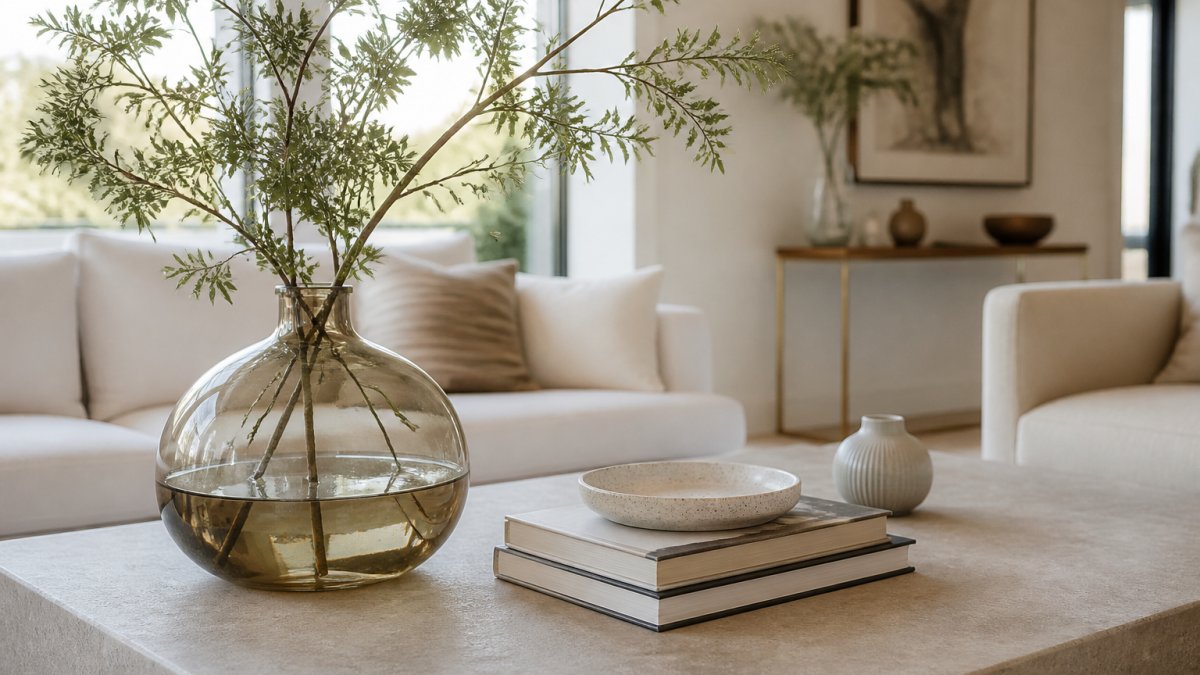
On a console, layer a tray, one tall object, and one low object. Our coastal resin tray at $11.99 measures 10 inches by 6 inches and works as a landing spot for keys or perfume. On a coffee table, the Vintage Mikasa Carmen crystal bowl at $18.99 holds fruit or nothing at all, and the scalloped edges catch light beautifully.
The Coastal Wood Mosaic Riser Stand at $19.99 does double duty: lift a candle, or use it as a small planter base. Watch out: stacking too many small accessories on one surface makes a room feel cluttered, not curated.
Luxury Home Decor by Budget: What to Buy at Every Price Tier
Most luxury home decor guides show beautiful rooms and skip the math. That leaves shoppers guessing whether a $30 vase is a steal or a compromise. A clearer approach is to sort accessories into three price tiers, decide what each tier can realistically deliver, and spend deliberately rather than evenly.
The framework we use: spend on the pieces your hands and eyes meet every day, the vase on the entry console, the bowl on the coffee table, the tray by the bed, and economize on pieces that sit high on a shelf or rotate seasonally.
| Tier | Typical Range | What This Tier Can Deliver | What to Expect at This Tier | Example From Our Collection |
|---|---|---|---|---|
| Entry | Under $20 | Small ceramics, trays, bowls, single stems | Honest material and clean form; limited size and finish complexity | Yellow Leaf W.M.G. Asymmetric Vase, $11.99 |
| Mid | $20-$40 | Hand-blown glass, carved wood, mixed-material vases, decorative storage | Visible craft detail and enough scale to anchor a shelf or mantel | Eastern Retro Hand Blown Glass Vase, $29.99; handmade mango wood vase, $34.99 |
| Investment | $40 and up | Larger statements, seasonal centerpieces, pieces with named provenance | Greater presence and heavier material; buy one, not three | Fall Basket Centerpiece, $39.99; LC Woven Grass Box, $35.99 |
Three rules make the tiers useful in practice:
- Buy one tier up on the anchor. If a room has one focal surface, put the mid- or investment-tier piece there. Entry-tier pieces work best as supporting accents, not as the centerpiece.
- Buy in odd numbers within a tier. Three entry-tier ceramics read as a collection; one entry-tier piece beside two investment pieces reads as an afterthought.
- Do not mix more than two tiers on one surface. A console with an investment vase, a mid-tier tray, and one entry-tier bowl feels curated. Four tiers on one table feels like a clearance shelf.
A $12 ceramic vase with a glossy finish and a painted backstamp, like our Yellow Leaf piece, proves the point: the material and form matter more than the price tag. Spend where the eye lands, save where it doesn't, and let each tier do the job it is actually good at.
Unique Home Decor Pieces That Make a Room Feel Collected
Unique home decor comes from mixing eras and origins, not from buying a matched set. A vintage German crystal bowl beside a contemporary wood vase reads as a story. Two identical vases read as a purchase.
The Centurion vintage wooden jewelry box at $19.99 is a good entry point: octagonal, faux-velvet lined, with a mirror and ring slots. It works on a dresser or as a small decorative object on a shelf. The Vintage Mikasa Carmen crystal bowl, made in West Germany, brings art-glass weight to a table setting.
Thanksgiving/Fall Centerpiece Flower Arrangement →
What most guides miss is that "collected" is a discipline. Buy one piece per season, not five per weekend. The room fills in faster than you think.
Mixing Materials: Warm Woods, Glass, Ceramics, and Leather
Mixing materials is what separates classy interiors from flat ones. The rule we follow: every grouping needs one warm material, one cool material, and one textured piece.
LC Woven Grass Box is a perfect example. Woven grass brings texture, genuine brown leather trim adds warmth, and the suede lining adds a soft contrast. At $35.99, it earns its keep in a bathroom, bedroom, or entryway.

Pair it with hand-blown glass and ceramic. Glass reflects light, wood absorbs it, ceramic softens the whole arrangement. Skip the temptation to match everything in one finish. A room that mixes brushed metals, warm woods, and polished stone feels designed. A room in one finish feels staged.
Small-Space and Renter-Friendly Luxury Styling
Small-space luxury styling follows one rule: every piece must earn its square footage. In a rental, add a second rule: every piece must leave without a mark. That combination rules out most of what styling guides recommend, wall galleries, built-in shelving, heavy drapery, and points toward a smaller set of moves that actually work.
Start with proportion, not product. On a 36-inch console, that means a vase in the 12- to 18-inch range, not a 24-inch statement piece. On a nightstand, a tray no wider than 12 inches keeps the surface usable.
Use vertical space without drilling. Height is the cheapest square footage in a small room. A tall vase with bare branches, a stack of coffee-table books, or a riser stand adds visual height without adding footprint. The Coastal Wood Mosaic Riser Stand at $19.99 lifts a candle or small planter off the surface and creates a second tier, the same trick a shelf provides, with no hardware.
Corral, don't scatter. In a compact room, loose objects read as clutter faster than in a large one. A single tray concentrates the eye. The coastal resin tray at $11.99 measures 10 inches by 6 inches and fits a nightstand, entry table, or bathroom counter.
Choose pieces that move. Renter-friendly luxury means accessories that survive a move and a lease. Hand-blown glass, carved wood, ceramics, and woven storage all pack and travel well; anything mounted, adhered, or sized to a specific wall does not. The Yellow Leaf ceramic vase at $11.99 works on a windowsill, a shelf, or a desk and weighs little enough to move in one hand.
Rotate rather than accumulate. A small room cannot absorb five new pieces per season. Buy one piece per season, store the rest, and rotate. The room reads as collected because it changes, not because it fills up.
Our unique home decor for small apartments guide covers seven layout ideas in depth. The short version: measure the surface, name the one object the piece will sit beside, and confirm it can leave the way it came in.
Shop the Frijja Collection to Style Your Space
The hardest part of styling a room isn't finding beautiful things. It's knowing which beautiful things belong together, and trusting that they'll hold up. That's the challenge we built Frijja around: a designer selection of affordable, handcrafted home decor and sterling silver jewelry, alongside fine jewelry and limited antiques.
Every piece in our collection is chosen for craftsmanship, not trend cycles. We stock hand-blown glass, carved wood, hand-thrown ceramics, and genuine leather trim, all at prices that make collecting feel possible. Our team stands behind every order with quality assurance and satisfaction guaranteed.
Get started with Frijja and build a room that looks collected, not decorated.
Frequently Asked Questions
What counts as a luxury home accessory?
A luxury home accessory is any decorative object that adds visual weight and craftsmanship to a room: hand-blown vases, crystal bowls, leather-trimmed boxes, artisan trays, and sculptural objects. What separates luxury from ordinary is material quality and finish, not price alone. A $12 hand-painted ceramic vase can read as luxury if the glaze is even and the form is considered. Look for pieces with visible craft: signed ceramics, hand-blown glass, genuine leather trim, and solid wood grain.
How can you tell if handcrafted home decor is high quality?
Check three things: material honesty, finish consistency, and weight. Genuine materials show natural variation, like grain in mango wood or swirls in hand-blown glass. Run your hand along edges for rough seams or uneven glaze. Pick the piece up; solid ceramics and crystal have satisfying heft. Ask whether the maker is named or signed. A backstamp or signature, like the W.M.G. mark on a vintage ceramic vase, signals a piece made with accountability rather than mass production.
How do you make a home look luxurious with accessories?
Edit before you add. Choose three to five luxury home accessories per room and give each one breathing room. Group objects in odd numbers and vary height: a tall wood vase beside a low crystal bowl. Repeat one material or color across the room to create cohesion. Keep surfaces 70 percent clear. A single well-chosen piece on a console table reads more expensive than a crowded shelf of trendy buys.
Where can you find unique handcrafted home accessories?
Boutique shops and artisan-focused online stores are the best sources for one-of-a-kind pieces. Frijja carries handcrafted and limited antique home decor, from a hand-blown glass vase to a vintage Mikasa crystal bowl, with prices starting at $11.99.

0 Kommentare